
Depression during pregnancy is common, but many people face barriers to accessing timely mental health support. Peer counselling – support provided by someone with lived experience of a similar challenge – may offer a more accessible way to complement traditional mental health care.
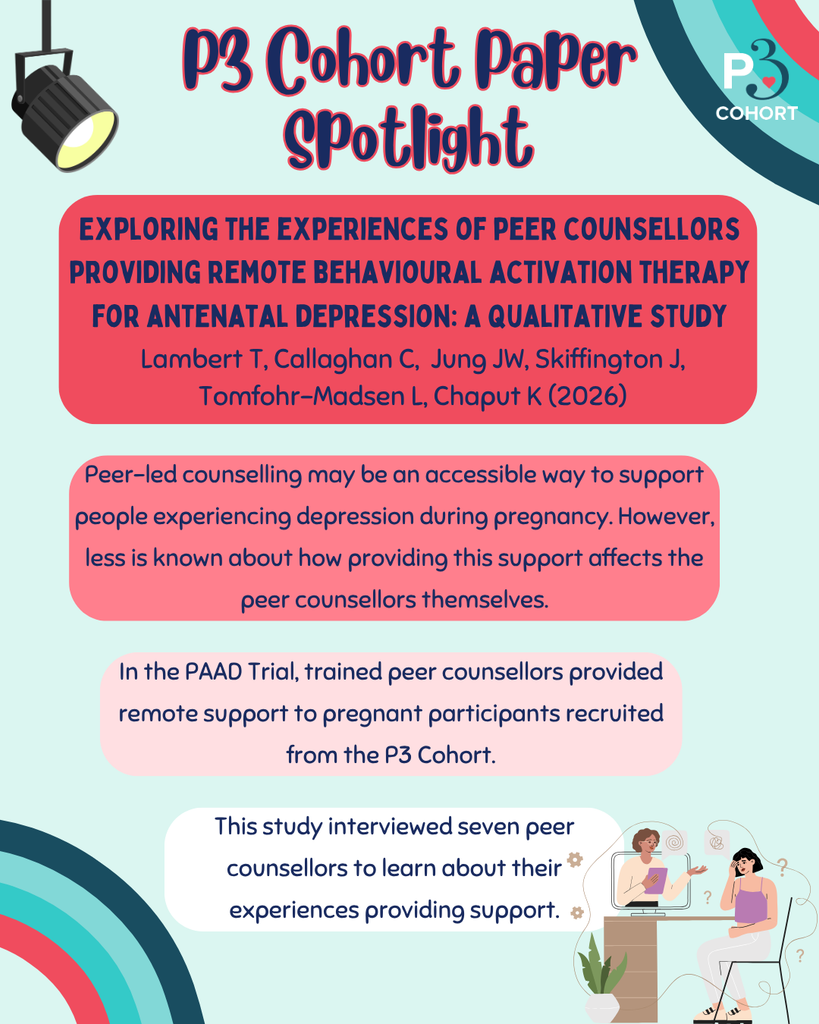
As part of the Peer-Administered Support for Antenatal Depression (PAAD) Trial, trained peer counsellors with lived experience of depression during or after pregnancy provided remote therapy and peer support to pregnant participants recruited from the P3 Cohort.
While peer support may benefit those receiving it, less is known about how providing this support affects the peer counsellors themselves. This study interviewed seven peer counsellors about their experiences with training and delivering the intervention.
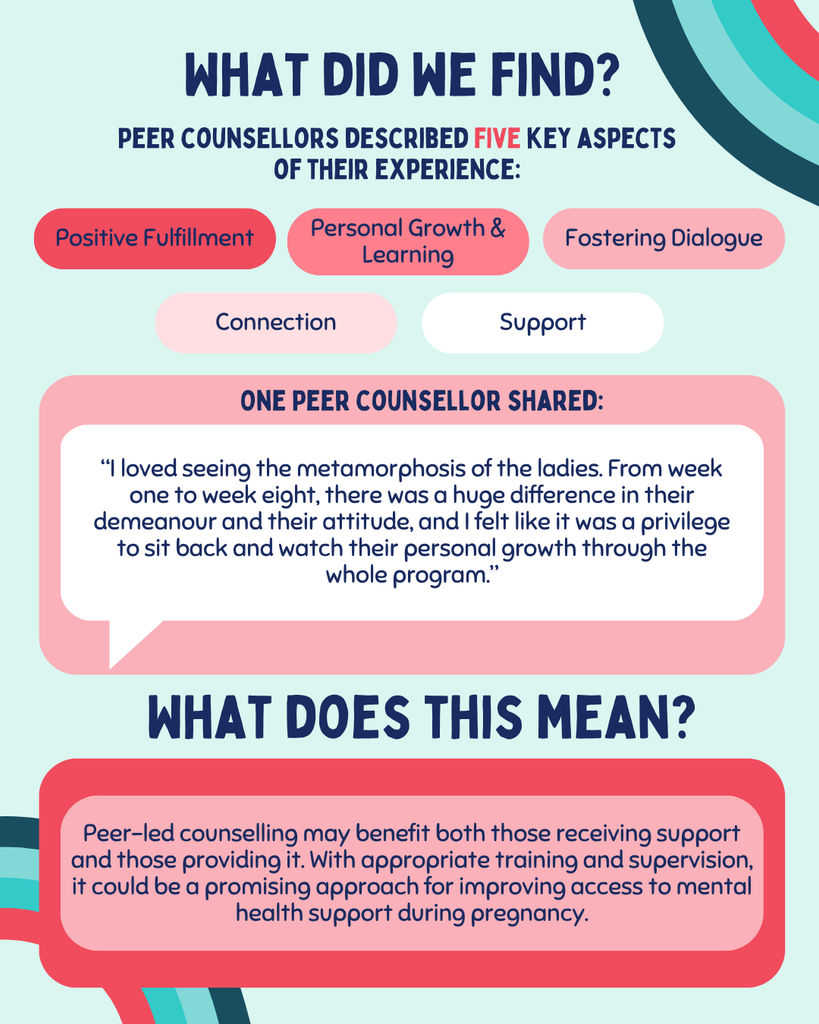
Five main themes emerged from the interviews:
- Fulfillment: Peer counsellors found purpose and satisfaction in supporting others and witnessing their growth.
- Personal growth and learning: Many developed skills that they could apply to their own lives and mental health.
- Open conversations: The experience helped counsellors discuss maternal mental health more openly and challenge stigma.
- Connection: Counsellors valued forming meaningful relationships with participants and other peer counsellors.
- Support: Training, supervision and clear boundaries helped counsellors feel prepared and supported in their roles.
One peer counsellor said: “I loved seeing the metamorphosis of the ladies. From week one to week eight, there was a huge difference in their demeanour and their attitude, and I felt like it was a privilege to sit back and watch their personal growth through the whole program.”
Overall, peer counsellors described providing support as a largely positive experience. The benefits appeared to extend both ways: pregnant participants received mental health support, while peer counsellors experienced fulfillment, growth and connection.
These findings support further exploration of peer-led counselling as a promising way to improve access to antenatal mental health care while also supporting the well-being of those providing it.
To read the paper, click here.
Lambert T, Callaghan C, Jung JW, Skiffington J, Tomfohr-Madsen L, Chaput K. Exploring the experiences of peer counsellors providing remote behavioural activation therapy for antenatal depression: a qualitative study. BMC Psychology. 2026;14:1154.